Car Trouble Fixer

Car Chair Repair Guide (2026): U.S. Seat Upholstery & Rebuild Benchmarks

Introduction
Exploring car chair repair in this introduction is your first step toward restoring interior comfort, evaluating upholstery restoration options, and keeping your vehicle’s seating supportive across the United States.
When daily commuting, sliding in and out of the cabin, or accidental tears cause vehicle seats to develop sagging foam cushions, cracked leather, or ripped seams, restoring your car chairs becomes an urgent priority. Understanding car chair repair and seat upholstery options helps vehicle owners prepare financially whether they opt for a DIY leather patch kit, high-density replacement foam padding, or professional custom reupholstery. Navigating auto interior restoration doesn’t have to be a guessing game. Understanding how seat foam breaks down, what typical national cost benchmarks look like for 2026, and how leather versus cloth wear impacts repair bills empowers you to make informed choices. Furthermore, exploring car chair repair helps U.S. vehicle owners navigate seat frame structural safety and professional trimming techniques. Additionally, knowing the fundamentals of car chair repair ensures that whether you are dealing with split bolster seams or collapsed lumbar cushions, you can choose the correct service. Moreover, understanding car chair repair enables motorists to evaluate DIY upholstery kits against professional custom trimming shops. Ultimately, mastering car chair repair is essential for maintaining ergonomic seating comfort and structural safety across every American road.
Understanding how high-density polyurethane foam replacement restores proper driving posture, recognizing the importance of reinforced stitching on high-friction seat bolsters, and evaluating DIY patch kits versus professional auto upholstery restoration centers empower vehicle owners to make smart financial and mechanical choices.
Throughout this introduction and the comprehensive guide that follows, we will explore an in-depth breakdown of car chair repair, detailing professional shop pricing matrices (ranging from $150 to $800+ depending on leather versus cloth and frame complexity), step-by-step cushion and seam restoration workflows, and practical answers to frequently asked questions to keep your vehicle’s interior looking and feeling factory-fresh on every American journey.
Symptoms and Damage Classifications of Car Chairs
Categorizing car seat damage early helps determine whether a localized patch, foam replacement, or full reupholstery is required. Watch for these primary damage classifications:
Cracked or Split Leather Bolsters: Continuous friction on outer seat bolsters causing leather dryness, cracking, and split seams along stitching lines.
Sagging and Collapsed Foam Cushions: Compressed or crumbled high-density foam padding resulting in a sunken seating position and metal frame poking through.
Fabric Burns and Tears: Cigarette burn holes, sharp object cuts, or pet claws tearing through cloth or vinyl seat covers.
Broken Recliner Mechanisms or Track Sliders: Manual levers or power seat motors failing to adjust position or causing the chair to rock loose while driving.
RISK LEVEL: Service Soon. While minor leather cracking or cloth stains are cosmetic, a loose seat frame or collapsed seat cushion compromises driving posture and crash safety in a collision.
Safety Assessment & Professional Standards
When evaluating your car chair damage and preparing your restoration budget for 2026, classify your situation using this practical scale:
Monitor: Light surface leather creasing, minor cloth fading, or superficial scuffs easily treated with leather conditioner.
Service Soon: Split side seams, flattened foam padding, or small fabric tears; schedule a weekend DIY patch or shop estimate.
Urgent Repair: Loose seat mounting bolts, rocking seat tracks, or exposed metal support wires pressing uncomfortably against your back.
Immediate Replacement / Rebuild: Broken seat frame welds or malfunctioning integrated side-airbag seat covers requiring professional overhaul.
Why it matters: Car seats function as primary safety restraint anchor points. A loose seat frame or damaged side-airbag upholstery compromises occupant safety during impact. Prioritizing prompt repair ensures structural compliance.
Required DIY Tools & Seat Repair Equipment
If you are an experienced home mechanic planning to tackle seat foam replacement or leather patching to bypass high shop labor fees in 2026, having the proper equipment is essential.
| Tool / Equipment | Purpose | Estimated U.S. Price |
| Leather Repair & Color Match Kit | Fills cracks and recolors minor leather scuffs and tears. | $20 – $40 |
| Upholstery Hog Ring Pliers & Rings | Secures seat covers tightly to internal metal frame wires. | $15 – $30 |
| High-Density Replacement Foam | Rebuilds sagging seat bottom and side bolster cushions. | $30 – $70 |
| Socket & Ratchet Set (Seat Removal) | Unbolts seat frame rails from floorboard mounting points. | $40 – $120 |
| Heavy-Duty Curved Upholstery Needles & Thread | Hand-sews split seams and torn cloth panels. | $10 – $25 |
Step-by-Step Car Seat Foam & Cover Rebuild Workflow
Follow this structured guideline to repair a sagging or torn car chair:
Step 1: Remove Seat from Vehicle: Disconnect the battery, unbolt the seat rails, unplug electrical connectors, and carefully lift the chair out through the door.
Step 2: Strip Upholstery Cover: Remove plastic side trim pieces and cut or unclip internal metal hog rings holding the fabric or leather cover to the foam.
Step 3: Repair or Replace Foam Cushion: Glue high-density foam inserts into collapsed bolster areas or replace the entire molded bottom foam pad.
Step 4: Reinstall Upholstery Cover: Pull the seat cover back over the refreshed foam, securing it tightly to frame wires using new hog rings and pliers.
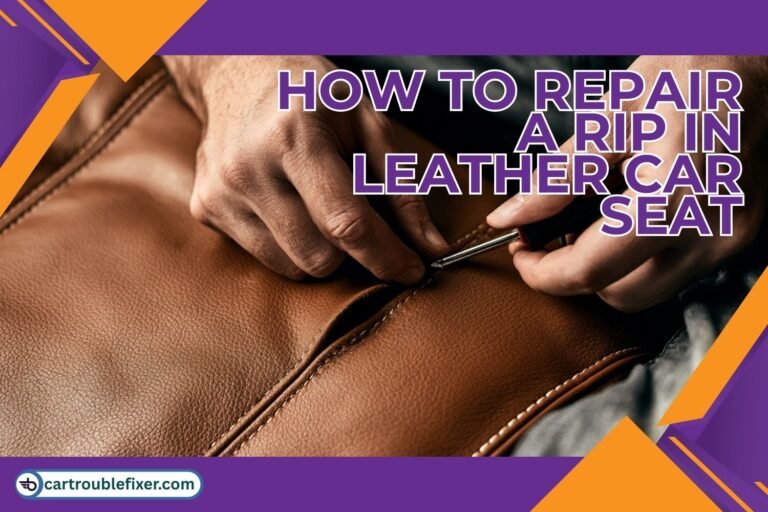
Step 5: Treat Leather or Patch Tears: Apply leather filler to cracks, sand smooth, dab color-matching dye, and seal with clear finish.
Step 6: Bolt Seat Back Down: Reinstall seat into cabin, plug in wiring harnesses, and torque mounting bolts securely.
COMMON MONEY-WASTING MISTAKES TO AVOID: Forgetting to disconnect the battery before unplugging power seats (triggering permanent airbag lights), ignoring broken frame springs, and using weak household glue instead of flexible upholstery cement.
Car Chair Repair & Upholstery Cost Benchmarks (U.S. 2026)
Understanding national pricing benchmarks helps motorists budget effectively for car chair repair projects:
| Repair / Service Category | Average U.S. Cost Range | Service Scope & Details |
| DIY Leather Kit / Foam Materials | $30 – $80 | Leather filler, dye kit, and high-density foam padding |
| Professional Leather Crack / Tear Spot Repair | $150 – $350 | Mobile upholstery technician repairing bolster cracks and small rips |
| Single Seat Bottom Foam & Cover Rebuild | $250 – $600 | Shop replaces collapsed foam cushion and re-covers seat base |
| Full Custom Leather Reupholstery (Front Seats) | $800 – $2,500+ | Complete premium leather covers and custom padding for front seats |
Repair Turnaround & Service Time Commitments:
DIY Seat Cushion Rebuild: 3 to 5 hours for seat extraction, foam padding replacement, and reinstallation.
Professional Upholstery Shop Service: 1 to 3 business days for custom panel stitching and full chair rebuilding.
Preventative Strategies & Regional Considerations
Keep your vehicle seating comfortable and structurally sound by following this routine plan:
Condition Leather Semi-Annually: Apply quality leather conditioners and UV protectants to prevent dry cracking and fading under hot sun.
Avoid Slid-Over Bolsters: Lift your body slightly when entering and exiting the vehicle rather than crushing the outer seat bolster foam.
Use Seat Covers in Work Vehicles: Protect heavy-duty work truck seats from tool wear, grease, and sharp objects using durable canvas seat covers.
Regional U.S. Climate Considerations:
Sunbelt States (Arizona, Texas, Florida): Intense UV exposure dries out leather upholstery rapidly; frequent conditioning is required to prevent splitting.
Cold Northern Winters: Sub-zero temperatures make cold leather stiff and brittle, increasing the risk of cracking when sitting down abruptly.
| Maintenance Task | Recommended Interval | Primary Benefit |
| Leather Conditioning & UV Protection | Every 3 to 6 Months | Prevents leather dryness, cracking, and premature splitting |
| Seat Track & Bolt Torque Check | Annually | Ensures seat rails remain securely anchored to the floorboard |
| Vacuum & Debris Removal | Monthly | Removes abrasive dirt particles that weaken seat fabric fibers |
Frequently Asked Questions (FAQs)
1. Can a sagging car chair or seat cushion be repaired without buying a new seat?
Yes. Sagging seats can be repaired by replacing the compressed foam cushion underneath with high-density replacement foam or by reinforcing broken metal support springs.
2. How much does professional car chair or seat upholstery repair cost?
Spot leather repairs cost $150–$350, single seat bottom foam and cover rebuilds range from $250 to $600, and full custom leather front seat reupholstery spans $800 to $2,500+.
3. How do you fix cracked and split leather seat bolsters?
Leather bolster cracks are repaired by cleaning the area, applying flexible leather filler compound, sanding it smooth, dabbing color-matching leather dye, and sealing with a clear finish.
4. Do I need to disconnect the battery before removing a car seat?
Yes. You must disconnect the negative battery terminal before unplugging power seat wiring or side-airbag connectors to prevent triggering dashboard airbag warning lights.
5. How long does it take to repair a car chair foam cushion?
A DIY seat cushion foam replacement typically takes 3 to 5 hours, while professional shop rebuilding takes 1 to 3 business days.
6. Can cigarette burn holes in cloth car seats be fixed?
Yes, cloth burn holes can be repaired using a textile fiber repair kit that fills the burn hole with adhesive and blends colored flock fibers to match the seat fabric.
7. Why do outer seat bolsters wear out faster than the rest of the chair?
Outer seat bolsters bear the full weight and friction of your body sliding across them every time you enter and exit the vehicle.
8. Are DIY leather repair kits worth buying?
Yes. DIY leather kits cost between $20 and $40 and provide excellent results for minor surface cracks, scuffs, and small tears.
Final Takeaway
Mastering the details of car chair repair in 2026 empowers you to restore your vehicle’s seating comfort and interior aesthetics efficiently across all U.S. driving conditions. Whether utilizing an affordable DIY leather kit ($30–$80) or investing in professional seat foam rebuilding ($250–$600+), addressing seat wear promptly restores driving posture, interior value, and cabin safety!